Category: Spending

  • 22. Spending Thousands on Unused Subscriptions Turned Out to be a Personality Trait in Disguise

    22. Spending Thousands on Unused Subscriptions Turned Out to be a Personality Trait in Disguise

    A gym I didn’t visit for almost a year was one of many money leaks caused by unused subscriptions, and the reason behind them was a psychological one that couldn’t be caught on a spreadsheet.

    I locked my bike outside the gym and just stood there for a moment, staring at the entrance and feeling almost as nervous as the first day I actually set foot in one.

    It had been almost a year since I’d last walked through those doors, while still having paid €35 every single month that had quietly left my account in exchange for absolutely nothing. A number that had looked manageable until I started piling it all up and realized the total amount flushed down the drain was roughly €400, all of it while not even having lived in the city the gym was located.

    My access card was still in my wallet, but I genuinely had no idea if it still worked. Maybe the gym had changed something in my absence, or maybe my subscription had been paused without me noticing. In the worst case someone would recognize me and ask where I’d been all that time, exactly the kind of polite and harmless question that feels the complete opposite when you’re the one being asked.

    Fortunately, the gate near the reception opened. No alarm, no staff member looking up, nothing. Just the quiet sound of a door that had no idea who I was or how long I’d been gone. I exhaled, walked through, and tried to pretend that this walkthrough had been just like all the others before it.

    But it wasn’t really the first time a gym entrance like this one had happened. This time was just the one with the longest stretch of absence of them all.

    The Ridiculous Story I Told Myself

    When I’d just finished my studies, I wasn’t allowed to live in my student house anymore. It had also become clear that I really needed to leave, because my new job had pulled me out of student life entirely. The rhythm of going to sleep and waking up whenever I wanted was no longer feasible, and that meant I had to move somewhere else. Since my then-girlfriend still had a couple of years to go in her studies, and I already knew that we’d eventually be looking for a new place in the same city to live together, I temporarily moved back in with my parents to accrue the necessary savings.

    It was at this moment that some mastermind logic had started kicking in around the gym membership I was still having: If I cancelled the gym subscription now, even though I would temporarily move to another place, I’d lose my extremely favorable student discount rate for this premium gym. When I eventually moved back to the city, I’d have to resubscribe at the regular price, so by continuing to pay €35 a month I was technically saving money in the years to come.

    Sounds like the kind of next-level math that even Einstein couldn’t have dreamed up, right? Well, here’s the true math that I failed to recognize at the time: Almost a year at €35 is close to €400. Four hundred euros to a gym I never visited, for a €10 to €15 discount I might use someday, on a membership I could have cancelled and resubscribed to at full price without coming out behind for at least two years. That’s €400 that could’ve gone to my savings buffer, to events I actually attended, or to anything else with a return greater than zero.

    Normally I would say that as unfortunate as the event turned out to be, I at least learned from it. But over the course of my adult life I’ve held unused memberships at four different gyms that followed more or less the same trajectory. 

    Then something would shift. Could’ve been a busy period at work or in my social life, a new personal fixation, or a different kind of moment where my focus drifted somewhere else entirely. The result? The gym visits would thin out, eventually become very rare, and then, for a number of months I’d rather not add up, I’d just keep paying.

    If I’m truly honest, the amount I’ve spent on gym memberships I didn’t use across my entire adult life is probably well over two thousand euro. If you would also throw in other subscriptions like streaming services I forgot about and software platforms I stopped using, the total number would probably even start climbing in directions I’d rather not look.

    Finding The Culprit

    So why did I keep paying? The easy answer that friends and family have always assumed has been sheer laziness, and for a long time I thought the same. But that’s not really what was going on.

    The honest version is that my attention spans are almost always all-or-nothing. When I’m really into something, I work in bursts of energy and intense hyperfocus, and during those bursts everything else tends to go quiet. It’s a mindset that’s actually helped me a lot in my life. It’s made me successfully land my first job, get promotions, got me in shape when needed, and built strong friendships through shared experiences that have already lasted multiple decades. When I really want to have or achieve something, the all-or-nothing mode switches on and good things frequently tend to follow.

    But the flip side of that same wiring is less convenient. When my focus moves somewhere else, the previous thing doesn’t fade gradually but just… stops existing in my head altogether. It’s probably the most literal version of “out of sight, out of mind” possible. It isn’t a situation where I’m deliberately avoiding something because I’m feeling guilty about it, but one where my attention has simply moved on and the thing I was paying for simply dropped out of the part of my brain that noticed.

    This is exactly why subscription services are such a brilliant business model to extract money from people like me. A small monthly amount, automatic, hidden in the noise of everything else leaving your account. Nothing forces you to think about it, and when you don’t naturally think about things that aren’t in front of you, you just… don’t.

    Occasionally something external would pull it back into view. A bank statement, a reminder e-mail, a friend mentioning their own gym membership. In those moments I’d briefly realize I should probably cancel, but by then I was already so deep into whatever had replaced it that I’d let it slide a little longer.

    The gym memberships weren’t uniquely expensive mistakes, but symptoms of a more general fact about how my mind actually operates. My attention is a strength when it’s aimed at something specific, but it’s also hemorrhaging money when aimed elsewhere.

    Quitting The Gym and Paying Monthly

    Although I’m still facing the occasional money leak challenge today, they’ve fortunately never been as severe as the gym-related ones anymore. I also haven’t set foot in a gym for ages, because I eventually learned that going to one doesn’t really help me taking care of my physical health in a sustainable manner.

    Instead, my physical activity lives at home. Bodyweight basics, kettlebells, a lot of walking. Is it optimal? Probably not. Would an elaborate gym with a more diverse range of equipment build me into something more impressive? Probably. But these things are always close by, so when a sudden burst of physical energy shows up I can immediately capitalize on it. There’s no gate to walk through, no card that might have stopped working, no staff member who might quietly notice that I’ve been gone for a while. The drift doesn’t cost me anything, because there’s nothing for it to quietly eat.

    The subscription side gets the same treatment, for the exact same reason. Unless I’m already a heavy user, I pay monthly rather than yearly because the reminder hits more often and my attention has more chances to land on it. I already do a quick scroll through my banking app every now and then to see what’s happening to my accounts, and that way I can notice and stop the leaking before committing to a full year and potentially missing the renewal e-mail.

    The real lesson from those four unpaid gym memberships wasn’t about the gyms at all. It was that my money leaks are actually downstream of how my mind naturally works, not how myself or others ideally would like it to. Fighting the drift wasn’t the answer, because the drift is just what’s unavoidably going on under the hood. But building a life where the drift doesn’t matter, and where there’s not too much to forget about while I’m focused somewhere else, turned out to be much more effective than any amount of promising myself I’d be more disciplined.

    Plugging money leaks, it turns out, starts with understanding yourself. It’s harder and more confrontational than it sounds, but also a lot more interesting than staring at a spreadsheet.

  • 20. I Used Tax Money for a Fancy Dinner With My Friends, and Felt Extremely Guilty After

    20. I Used Tax Money for a Fancy Dinner With My Friends, and Felt Extremely Guilty After

    After a very expensive dinner with my friends, I got a gentle reminder to remain diligent and true to yourself when spending someone else’s money.

    “Hey, I heard you and the other student board members had a great dinner in the city center. How was it?”

    The Executive Director of the faculty board I was part of had caught me in the hallway. I smiled, still riding the high from the night before.

    “It was great! Six courses and matching wines, what more can a man ask for?”

    “That sounds delicious. What was the total damage, if I may ask?”

    “Right around €2,000.”

    “I’m really happy that you and your friends had such a great evening,” she said, her tone shifting slightly. Still warm, but with an edge I usually only heard in board meetings. “But can I ask you a more critical question? Can you tell me who eventually paid for that dinner?”

    “Of course! The dinner was paid from the general expenses budget of the University Board, since student members from all faculties were involved.”

    I still didn’t understand where she was going.

    “Then let me ask you a follow-up question: Do you know where the University Board actually gets that money from?”

    And there it was. The question landed, and my proud smile faded into something more awkward. I knew exactly what she was asking and implying.

    “It’s tax money coming from the government’s lump sum, so ultimately the Dutch taxpayer has paid for our fancy dinner…”

    The Flip Flop Reservation

    I was 22 years old and it was the final week of my two-year term as the student member on the board of one of my university’s faculties. This period also meant that it was time for a yearly tradition: a dinner with all the outgoing and incoming student board members.

    Our small group was its own administrative body within the university. We were tasked and mandated with managing a diverse range of topics across the entire student affairs portfolio, and since I was its Chair, it had been my responsibility to arrange the yearly dinner.

    I’d contacted the secretary of the University’s executive board about the payment. He discussed it with the Financial Director of the University Board and then gave me a cost center number. When I asked for specific budget guidelines, he clearly stated that there weren’t any and that the board trusted my judgment. So one week before the dinner, on a hot summer day, I walked into one of the most upscale restaurants in the city to make a reservation.

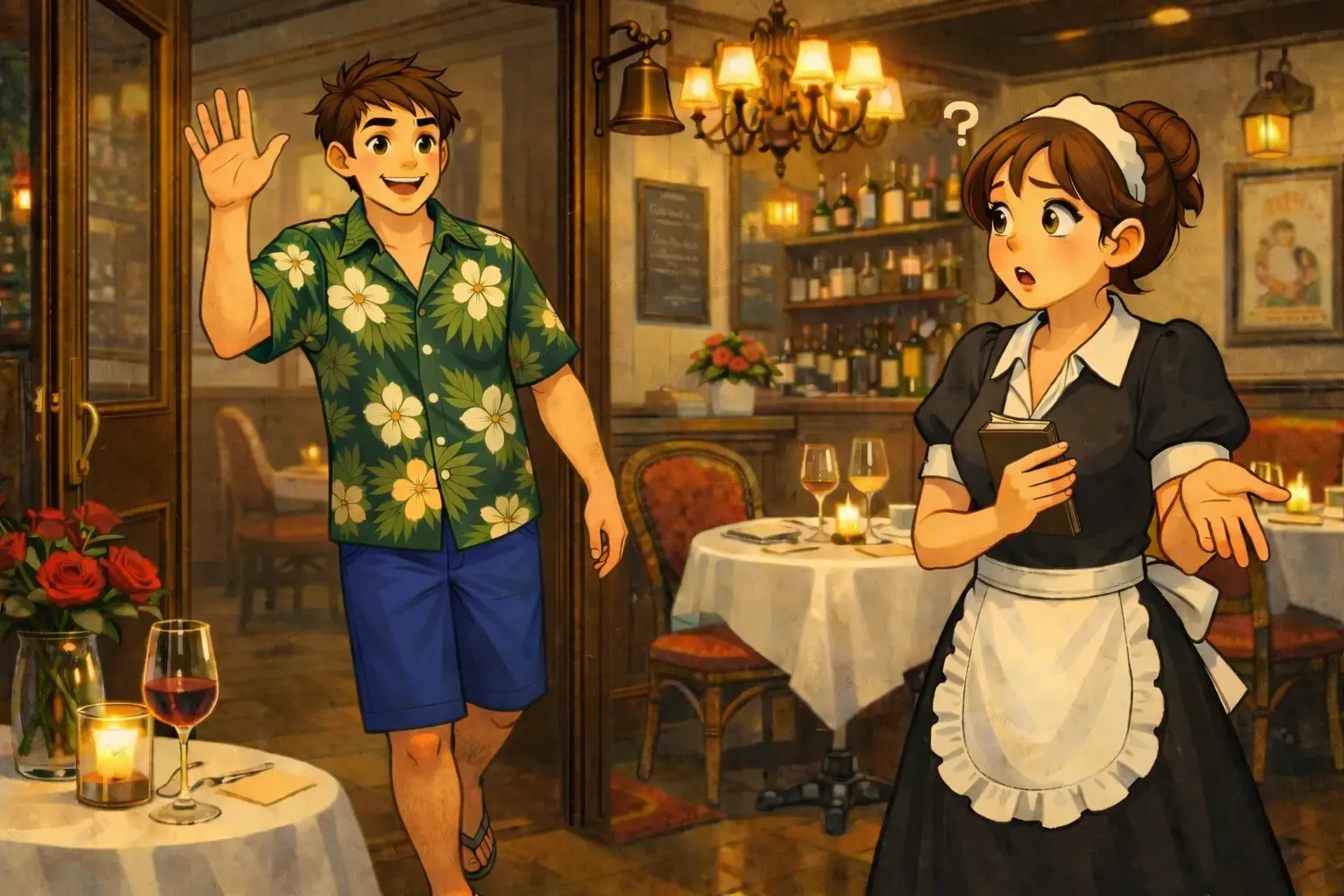
    I hadn’t really planned on making the reservation that day in person, which became immediately obvious to everyone in the restaurant when I walked through the door. I’d just come from hanging out with friends at a nearby lake and the restaurant was on my way home, so I arrived there in my swimming shorts and flip flops. Not exactly the restaurant’s usual clientele, as you might imagine.

    The waitress behind the counter was already preparing for a busy evening. She was a couple of years older than I was, and looked at me with what I can only describe as polite suspicion. I gave her the guest list, the dietary requirements, the allergies, and the cost center.

    What I didn’t know until after the dinner, was that she’d been the chair of the most elite student association in the city the year prior. She knew exactly how the university worked internally, and when I handed her the cost center she smiled knowingly. “Is the University Council having another dinner again?”

    Her eyes went wide with a mix of both complete surprise and confusion when I honestly replied “Nope, not today. This one is actually the general expenses budget of the Executive Board”. Guess it’s not every day that someone who looks like he just came from a tiki party casually makes a reservation using a number that required the highest possible level of approval you could get within the university  

    Her surprise and confusion quickly and understandably started turning into extreme curiosity, so I wished her a great evening and went home to continue doing not much after a long day of already having done exactly that.

    The Dress Shoe Dinner

    The dinner that followed one week later still remains one of the most memorable I’ve ever had. And this time, I walked into the restaurant in full business attire: Suit, tie, dress shoes, the whole shebang.

    But in the end, the food wasn’t what made the evening memorable. It was the people.

    When you’re sitting together with a group you’ve worked intensively with for an entire year, people who’ve become your friends and that you’ve shared your highs and lows with, it elevates everything. The stories came pouring out: Events we’d organized together for all students of the University, the time we offered a former prime minister of Finland some stroopwafels during a work trip, the weekend trip to the Belgian Ardennes. We tried to make sure the incoming members felt welcome, hoping to give them the same start we’d been lucky enough to have had the years before.

    It was, by any measure, a wonderful evening.

    The Question That Stayed

    Still, the conversation in the hallway with the Executive Director didn’t stop with her critical questions, they clearly got me thinking and I asked if there was some more time to talk about it properly.

    I told her more about the dinner and how I’d made the reservation, that I understood what she said about where the money came from, and that I absolutely felt guilty about the expense if it was viewed from that perspective. So also I asked her honestly: what would she have done?

    Her answer was one that has resonated with me through the years.

    “Of course it’s not a problem to celebrate your achievements and have a great time with the people you achieved them with,” she said. “But it’s also about opportunity costs. About whether something is truly necessary for you to have a good time. There’s a balance to be found there.”

    She paused.

    “My guess is that this dinner would’ve been just as memorable if the ten of you had gone to a perfectly good restaurant and spent half of what you did now. That would’ve freed up a thousand euros for something else, and that could literally be anything: extra financial support for a student who really needs it, psychological services for students with mental health issues, you name it. Money can only be spent once, so it matters how you spend it. Of course you’re an individual case now, but imagine the possibilities if we would make such decisions more often.”

    She was right, and I absolutely felt a sense of guilt about the way I had approached things, and then she said the sentence that has stayed with me ever since.

    “Next time, just ask yourself whether at heart you’re the guy in the flip flops or the guy in the dress shoes when you’re making a personal expense with someone else’s money. Although I think we both already know the answer to that one.”

    Someone Else’s Money

    That ten-minute conversation fundamentally changed how I think about spending money that isn’t mine.

    I realized my actions didn’t exist in a vacuum. And once I started paying attention, I noticed how often people’s behavior shifts when someone else is footing the bill. Work parties where people drink more, and more expensively, than they ever would on their own dime. Dinners where the prices on the menu suddenly stop mattering because the company is paying. The quiet assumption that when it’s not your money on the line, the normal rules don’t apply.

    I won’t pretend to be a saint, because I’d absolutely been one of those people. The fancy dinner was arguably the most extreme example, but it also wasn’t the only one. It made me wonder whether any of it was truly necessary, and whether I was presenting a version of myself in those moments that wasn’t really me at heart.

    The lesson I took out of it wasn’t a complicated one: When someone else is paying, consume with a little more awareness and moderation. Not because you’ll get in trouble, but because that money could go somewhere that matters more than your third or fourth glass of wine. Because the version of yourself that emerges when money feels free might not be the version you actually are or even want to be.

    I knew which version I wanted to be. I’d known it the moment I walked into that restaurant in flip flops, before the suit, six courses and matching wines complicated everything.

    At heart, I’m still the flip flop guy. And I plan to stay that way.

  • 19. My Three-Week Road Trip Through Oman Cost Less Than a New iPhone

    19. My Three-Week Road Trip Through Oman Cost Less Than a New iPhone

    Checking our expenses after a three-week long road trip made meI realize that the best things in life are often not the ones that we pay the most for.

    “That can’t be right, there must be a miscalculation here. I’d budgeted two or three times this amount.”

    When we returned from our holiday in Oman, we did what any group of friends does after three weeks on the road together: splitting the bill.

    Transport, accommodation, food, activities, literally everything except the flight that we’d already paid for. We’d driven over five thousand kilometers in a brand new four-wheel drive, slept in lodges and desert camps, had eaten until we couldn’t move, hiked mountains, swam in hidden pools, and watched the sun set over dunes that looked like they’d been painted. Three weeks of the kind of travel you’d assume costs a small fortune.

    The total had come in at just over €1,100 per person.

    We checked the math twice, and actually checked our banking apps to evaluate whether there were expenses that were missing. For some inexplicable reason, twenty-one days of adventure across one of the most beautiful and friendly countries I’ve ever been to had cost less than a new iPhone.

    We hadn’t set out to do a budget trip in the slightest. We weren’t camping to save money or skipping meals, had comfortable stays, ate so much we all gained a couple of pounds, and in general just did everything we wanted.

    The trip had simply been amazing, but when I was finally back on Dutch soil, still amazed by the total costs, it hit me: more or less everything that we’d done, and certainly the moments that we would remember the most, had barely cost anything at all.

    Why Oman

    Oman might actually be one of the most underrated holiday destinations, and this three-week road trip hadn’t been my first time there. I’d already visited twice during my student years, mixing study with exploration. Still, coming back with four close friends almost five years later was different. It wasn’t just about making memories, it was about sharing them.

    Others have frequently asked why I preferred to visit Oman when more popular places like Dubai or Abu Dhabi are literally on the other side of the Hajar mountain range. And although I’ve visited the Emirates as well and had a wonderful time there, the answer is simple: the UAE has made a conscious choice to trade a large part of its cultural authenticity for elements of luxury and prestige from all over the world, creating a (in my view) somewhat superficial culture of status and extravagance. I have, for example always been baffled that the Emirate of Abu Dhabi has paid approximately $525 million to use the name “Louvre” for one of its museums. Completely nuts.

    Oman has deliberately decided to exist on the exact opposite of that spectrum, and its entire tourism strategy is built around what it’s always had: hospitality that feels genuine, culture that runs deep, and a kind of unpolished authenticity that’s increasingly rare to find these days.

    The result of that strategy could actually be directly felt in our pockets. By emphasizing and experiencing what the country already naturally possessed and offered, there was no need to pay extra for luxury and extravagance. The beauty was already there, and it wasn’t asking for a premium at all.

    Abundance Without Invoices

    After landing at Muscat airport, we picked up a brand new 4×4 with less than 500 kilometers on the clock at a local rental company. The total costs? Easily less than half of what the airport kiosks would’ve wanted for the exact same vehicle.

    We took the rest of that day to recover from the flights, and explored the Corniche and Mattrah Souq in the evening. The next day we went looking for somewhere to swim. Some questionable Google Maps scrolling led us first to the building site of a new Trump resort instead of the beautiful bay we were promised, but fortunately our second try landed us on a hidden beach with turquoise water and not another person in sight.

    No entrance fee and no crowds, but just us, the sea, and the good life.

    That experience set the tone for everything that followed, and probably shaped many of the choices for the visits we made after. After leaving Muscat we drove north, and the highlights kept arriving without any invoices attached.

    We hiked in the Hajar mountains, where cliffs older than recorded history made us feel like specks in a painting. We visited the beehive tombs of Bat, burial sites older than the pyramids, standing almost alone in the desert because hardly anyone knows they exist. We walked the balcony trail at Jebel Shams, Oman’s answer to the Grand Canyon on a trail that’s equally breathtaking as it is terrifying. We watched the goat market in Nizwa, which operates with all the intensity of a stock exchange except the assets bleat. And from there we drove to Wahiba Sands, Oman’s desert, where we watched the sun set under the dunes and had one of the most amazing views of the Milky Way I’ve ever had.

    None of those experiences, bar the overnight stays in between, had cost us a single euro. The mountains didn’t charge admission, the ancient tombs had done fine without a ticket booth for five thousand years already, and the stars and campfire laughter in the desert came free of charge as well.

    The Long Road South

    Fortunately, Salalah itself was worth every empty kilometer. Green mountains that looked borrowed from another continent, and a more upbeat atmosphere that we hadn’t experienced in the rest of the country. We visited the ruins of ancient trading ports, accidentally joined a local festival organized at a museum, and did a snorkeling trip where we literally floated above a shipwreck that was hidden just offshore.

    On our way back north, instead of driving 730 kilometers back again until the next roundabout, we decided to take the coastal road . It was, easily one of the best driving experiences I’ve ever had, even better than driving through the desert earlier that trip. The landscapes shifted like someone was changing television channels in front of our eyes: beaches, cliffs, valleys, mountains, literally a whole Planet Earth series passing by in a couple of hours. The only cost we had to make for it was the petrol, and we would’ve needed that regardless of which route we took.

    On our trip back toward Muscat, we stopped at the Oman Across Ages Museum, cooled off in the Wadi Bani Khalid and Wadi Shab, and on a whim during our stay in Sur caught a screening of the newly released Wicked movie dubbed in Arabic. When we arrived back in Muscat and handed in the car with over six thousand kilometers on the counter, our last night was a splurge: a luxury hotel in Muscat that felt like a palace, even though we’d already had very comfortable stays in the meantime. And from there, after a good night of sleep, it was back on the plane, heads full and wallets less dented than anticipated.

    Remembering What I Paid Nothing For

    Looking back, the reason for the surprise we experienced when taking a good look at the total expenses was evidently hidden in plain sight: almost none of the things that had made this trip unforgettable actually involved spending significant money.

    The balcony walk didn’t cost us anything, and neither did the wadi swims or the hidden beaches. The desert silence was free, and so were the stars, the laughter around the campfire, the stories we’ll retell for years, none of it came with a receipt.

    And in the instances that we did have to spend, all of it was manageable. Food was cheap if you just followed your nose and the locals, museum visits did not require us to pay the jackpot, and we could share the costs on transport and accommodation. We also unintentionally chose comfort over luxury from the start, and because the country always met us halfway at every turn we never felt like we were missing out or had to upgrade our standards or needs.

    Today, I still occasionally think about the Oman trip. It’s a gentle reminder that the best parts of life are often cheap or free, and that they always will be because they require a completely different effort to obtain. They just require you to show up, go out, pay attention, and actively share your own joy with the people who matter.

  • 17. No One Could Make Sense of My Spending Logic, Including Myself

    17. No One Could Make Sense of My Spending Logic, Including Myself

    It took a hefty dose of reflection to finally answer a question my ex-girlfriend asked on our couch years ago.

    We were sitting on the couch in our apartment, having the same conversation for what felt like the sixth or seventh time.

    The topic: plants. Our balcony looked like a waiting room at a dentist’s office: bunch of chairs, empty corners, zero life. We’d moved in a year earlier and both agreed the place needed greenery. Not like a jungle, but enough to make it feel like humans actually lived there.

    I’d graduated two years ago and had a steady, well-paying job, especially for someone my age. She was still finishing her Bachelor’s degree, so we both knew who’d be paying for the plants.

    “It’s not going to cost hundreds of euros,” she said. “We’re not buying a statement piece. Just some basic plants to make the place feel more alive.”

    She was right. The total would be trivial, the kind of expense that shouldn’t require a single thought.

    And yet here we were, again, having postponed the garden center trip a couple of times already. Each time I’d agreed we should go, but didn’t make haste to actually push through with it.

    Her frustration finally surfaced.

    “Honey, I know what you’re roughly making. I know our monthly costs. You can easily pay for this and you even agree we need it as well, so why do we keep having this conversation?”

    I opened my mouth to answer, but nothing came out.

    Not because I was hiding something, but because I genuinely didn’t know. The question was simple and completely valid, and I had no answer that made sense, even to myself.

    The Plants Weren’t Alone 

    It would take until after the end of that relationship before I finally understood what had been happening. The plants hadn’t been an isolated case and it also hadn’t just been my ex who’d called me out on my spending behavior, my friends and family had done so on more than one occasion as well.

    I’ve often been told that my clothing follows a lifecycle that would horrify anyone who pays attention to fashion. New items almost always start off as work clothes. Once they’re no longer presentable enough for the office, they become weekend clothes, and errand clothes after that. By the time I finally replace an item, it’s usually one rainstorm away from disintegrating.

    My shoes tell the same story. I’ll notice a pair is worn out, acknowledge I should probably replace them, and then somehow still not get around to it for months. It’s not even that I forget, it’s just that something in my brain simply refuses to prioritize it.

    This isn’t standard frugality. My parents are frugal and they certainly bought those things when needed. What I was doing clearly was something else, with a pattern I couldn’t name and rules I couldn’t consciously articulate.

    And the even stranger part? During those same periods when I couldn’t commit to upgrading my interior or the stuff I was wearing, I was happily spending money on trips with friends, dinners with family, and experiences that cost multiples of what the garden center would’ve charged for those plants.

    From the outside, this makes no sense at all. And I would absolutely agree if I hadn’t eventually discovered the hidden principles that guided my actions underneath.

    What Everyone Else Could See 

    The people around me could see my job, our apartment, and my lifestyle. They could make a reasonable estimate of my income and form calculated expectations about what I should and shouldn’t be able to afford.

    So when someone who’s earning a decent salary suddenly agonizes over small purchases, it reads as strange. Stingy, maybe. Neurotic, possibly. Financially anxious, despite visible evidence to the contrary. When comparing spending to my income, everything I did looked inconsistent. Big trips, yes. Plants, no. Expensive dinners, absolutely. New shoes, apparently not.

    But eventually I realized people couldn’t see the other part, the invisible part. Judging my spending against my income is using a measuring stick that only makes sense when you can’t see all sides of someone’s financial situation. Others could only see what roughly came in, but not what I also actually tried to keep in.

    And that’s when I realized that I wasn’t spending based on my income at all. I was spending based on my wealth.

    The Three Invisible Buckets 

    Even my friends and family don’t see all the money moves that happen when my salary arrives, like the money directly routed to savings and investments before I can touch it. They couldn’t see the buffer I was building, the targets I was working toward, or the specific numbers I’d assigned to “enough”.

    I don’t officially maintain a budget on paper because I’ve found that daily banking app checks, basic arithmetic and anticipating for larger expenses help me stay in control of my financial situation without much effort. But when money arrives, it doesn’t stay as one undifferentiated pile. Instead, I split it into three buckets without even actively thinking about it.

    The first bucket is immediate. Rent, utilities, groceries, transportation. Non-negotiable, exits immediately, doesn’t require thought.

    The second bucket is medium-term. This is the money I allocate for things that truly matter to me, like those trips, experiences, and dinners with the people I love. It accumulates deliberately, and then gets spent freely when those purposes arrive. No guilt, no hesitation.

    The third bucket is long-term. This is wealth-building money that leaves my accessible accounts immediately and goes somewhere I deliberately make it harder to touch, primarily investments. It’s not for spending, but for compounding and for freedom that arrives later.

    The plants were a discretionary expense that was competing with that third bucket. Not directly, but psychologically. Every euro that stays in daily spending is a euro that doesn’t compound toward the future I’m building. And my brain, without my conscious permission, had decided that plants weren’t worth slowing that down. Not at that moment, at least, because the value of that expense relative to my gradually growing wealth at the time was still quite significant.

    The trips, however, weren’t competing with that third bucket at all. They came from the second bucket, which existed specifically for exactly that purpose. Different pool, different rules, different feelings. But when you take all of it together, it certainly leads to a picture of difficult to understand spending behavior.

    The Invisible Scoreboard 

    Looking back, most people around me couldn’t see my internal wealth-building scoreboard or simply weren’t really interested in it when I told them about it. They could only see my hesitation, which looked irrational because it was being compared to the wrong baseline.

    They would say things like “What’s the point of having money if you don’t spend it?”, and I understand the objection. Life is short, tomorrow isn’t guaranteed, and you can’t take all of that money with you.

    But I expect to be alive tomorrow, and a bit after that as well, which means I need to find a balance between enjoying today while building a foundation for a future I’ll enjoy even more. A future that hopefully doesn’t include just me, but also a partner and children that should be well taken care of.

    Today, I’ve stopped trying to explain and justify my spending behavior to people who aren’t interested in it or aren’t playing the same game. From their perspective, I’m just cheap about some things and generous about others, with no apparent logic connecting them.

    From my perspective, I’m following a single principle with perfect consistency: protect the long-term bucket, fund the medium-term bucket to sufficiently enjoy life, live within whatever’s left, and accept that this will sometimes look strange to anyone who can’t see the full picture.

    What I’d Tell My Ex Now 

    If I could go back to that couch, here’s what I’d tell my ex:

    I didn’t have those words then. I do now.

    The trade-off is real. I look inconsistent to anyone who can’t see the scoreboard. I occasionally frustrate people who don’t understand why easy decisions feel hard.

    But I also sleep well. I don’t have to worry about money most of the time, especially now that those choices from years ago have steadily started compounding. And when I spend, I spend without guilt, because it fits within a system I’ve built and trust.

  • 10. Dinners with My Grandparents Became Worth More Than Every Toy I’ve Ever Owned

    10. Dinners with My Grandparents Became Worth More Than Every Toy I’ve Ever Owned

    From Action Man crashes to 250,000 km Toyotas, here’s why I’ve learned to prioritize experiences over things, and functional durability over status.

    I was six or seven, standing in the toy store aisle, begging my mother for the brand new Action Man Air Patrol. Barbie’s ripped, weaponized cousin had it all: muscles, camo gear, and gadgets that made him look ready to invade space. The packaging showed him soaring through the air, and the magazine ads I’d read religiously promised he could actually fly.

    “Please,” I said for probably the tenth time. “I’ll use my birthday money.”

    She caved. I paid with crumpled bills I’d been saving. When we brought him home, I pressed the button to make his heli-pack spin and launched him skyward in the backyard, with all the hope a seven-year-old could muster.

    And… Action Man crashed harder than a budget airline in a snowstorm.

    Two days later, Action Man was grounded for life in the corner of my room. I had to find a new toy to make me happy again. 

    How I Kept Falling For It

    Here’s the thing about being a kid in the ’90s and ‘00s: you were constantly swimming in marketing without even realizing it. TV commercials between Saturday morning cartoons and magazine ads that made every toy look revolutionary. Each one promised something better, more exciting, more essential than the last.

    And like all of my classmates at primary school, I fell for it. A lot. Looking back now, all the must-haves of my childhood essentially followed the same pattern: intense begging, brief excitement, quick disappointment, permanent dust collection.

    Because Action Man wasn’t alone. There were Lego sets with missing bricks, Pokémon cards that tanked in value the second a new expansion dropped (probably made a mistake on that one), and Beyblades that spun for thirty seconds of glory before becoming desk clutter. Every single one followed the same cycle: a short high, then silence.

    And unlike Woody in Toy Story, none of my toys seemed particularly bothered about being replaced by the next shiny thing. They just quietly accepted their fate in the corner while my parents, who’ve always been frugal, probably sat there wondering how their kids kept falling for marketing campaigns that basically sold overpriced plastic disappointments.

    The Only Toy That Lasted

    One toy never lost its magic, though: a football. The round kind, not the American one.

    Not because it was indestructible or expensive. The opposite, actually. It was cheap, simple, and eventually wore out like everything else.

    But what it created? That lasted. Pickup games with neighbors until dark, hours in the park with my brother, the occasional smashed window that had us sprinting away from angry neighbors. The ball itself wasn’t valuable, but the time we spent together because of it was.

    And maybe that’s when the pattern started revealing itself. The things that broke or bored me weren’t valuable. The moments with my family and friends were.

    When We Stopped Asking for Stuff

    So as birthdays passed, my brother and I stopped asking less for toys. We already had heaps of them lying around and became increasingly less interested in the next thing that would disappoint us in a week. Instead, we asked for money we could save until something we actually wanted came along and, even more important, a family dinner out with our grandparents.

    A simple dinner? Absolutely. And looking back now, those dinners have become worth more than all the toys I ever owned.

    There was this Dutch pancake restaurant we’d go to regularly. The pancakes were great, but that wasn’t really the best part. It was having all of us together at one table.

    Put them at the same table with my parents, brother and me, and chaos followed. The extraverts would dominate the conversation. The introverts would try to get a word in. Someone would make a joke. Someone else would take it seriously, or make a sharp comeback. My brother and I would just sit there laughing at the whole dynamic.

    Two of my grandparents are gone now, and the others unfortunately aren’t getting any younger. I’d pay anything (and I mean anything) without blinking twice for just one more of those dinners.

    The toys are long gone, too. But I don’t miss a single one of them.

    How This Shaped What I Spend Money On Today

    That pattern from childhood gradually followed me into adulthood. Material possessions still disappoint me more often than not. The excitement fades, the thing breaks or gets replaced, or it just sits there taking up space.

    So today, I deliberately spend more on experiences than things: A good dinner with friends, a day trip somewhere new, a weekend abroad. Yes, it costs money, but every single time I walk away richer. Not in cash, but in stories.

    Stories like the time in Aruba when I decided to order a tequila shot with a scorpion in it. At breakfast and in front of my parents, for no other reason than the option simply presenting itself. Or the moment in Oman when we almost drove off a cliff because the narrow mountain road suddenly ended, and we had to reverse the entire way back before dark, hearts pounding the whole time.

    The stories from those experiences appreciate every time someone brings them up, every time we laugh about what happened. Meanwhile, no one’s ever gathered years later to say: “Remember that time you bought that slightly faster iPhone?”

    When I do buy material possessions today, I ask myself first if they serve a clear function and will last long enough that I can forget about them. My laptop works and does what I need, my jacket keeps me warm and will last years. I’m perfectly fine spending more when it means higher durability. And if you’ve ever read the Boots Theory, you know it might actually even be cheaper in the long run.

    The Trade-Off Nobody Talks About

    Of course, saying yes to experiences also means saying no in other areas. For me, one of the clearest examples is my car.

    I drive a 15-year-old Toyota hybrid with over 250,000 kilometers on the clock, and hopefully many more to go. When I bought it secondhand, it ticked every box: cheap, safe, reliable, fuel-efficient. Basically the Labrador of cars: loyal, low-maintenance, perfectly boring.

    I’ve sat in Porsches before and loved every second of it. But would owning one make me happier than a couple of weeks abroad with my friends? Not even close. Buying a car like that might make total sense compared to other cars in its price range, but not compared to the exorbitant amount of dinners, travel and other activities that could be done with the same money. 

    That’s the opportunity cost people rarely think about when buying things. Every euro spent impressing others or chasing status is a euro that can’t create a memory with the people who matter. So my money went to a cheap, reliable car with maintenance costs so low it’s almost laughable. It gets me everywhere I need to be and allows the rest of my money to stay invested or go to flights, dinners, and adventures instead.

    Irreplaceable Memories

    Look, I know you can’t pay rent with memories. You’ll always need material things: a place to sleep, tools that work, clothes that make you presentable. But I try to buy those for durability and purpose, not for signal. And what’s left after covering those needs? I save it for what actually makes life rich: dinners with the people I love, trips to places I’ve never been, conversations that turn into stories, laughter that echoes long after the moment ends.

    Most stuff gives you a quick dopamine hit, then it breaks, fades, or gets replaced. Experiences give you stories, memories, and bonds that appreciate in value every time you retell them. Action Man never flew, but in a way he taught me how to invest. Not in plastic that disappoints, but in stories that last.

    The toys are gone. The grandparents who made those dinners special are partially gone too. But the memories from those restaurant chaos sessions? Those are still here, still valuable, still irreplaceable.

    That’s why I choose memories over things. Because real wealth isn’t parked in your driveway or gathering dust in a corner. It lives in the stories you share, the people you love, and the moments that last long after the receipt is gone.