From Action Man crashes to 250,000 km Toyotas, here’s why I’ve learned to prioritize experiences over things, and functional durability over status.
I was six or seven, standing in the toy store aisle, begging my mother for the brand new Action Man Air Patrol. Barbie’s ripped, weaponized cousin had it all: muscles, camo gear, and gadgets that made him look ready to invade space. The packaging showed him soaring through the air, and the magazine ads I’d read religiously promised he could actually fly.
“Please,” I said for probably the tenth time. “I’ll use my birthday money.”
She caved. I paid with crumpled bills I’d been saving. When we brought him home, I pressed the button to make his heli-pack spin and launched him skyward in the backyard, with all the hope a seven-year-old could muster.
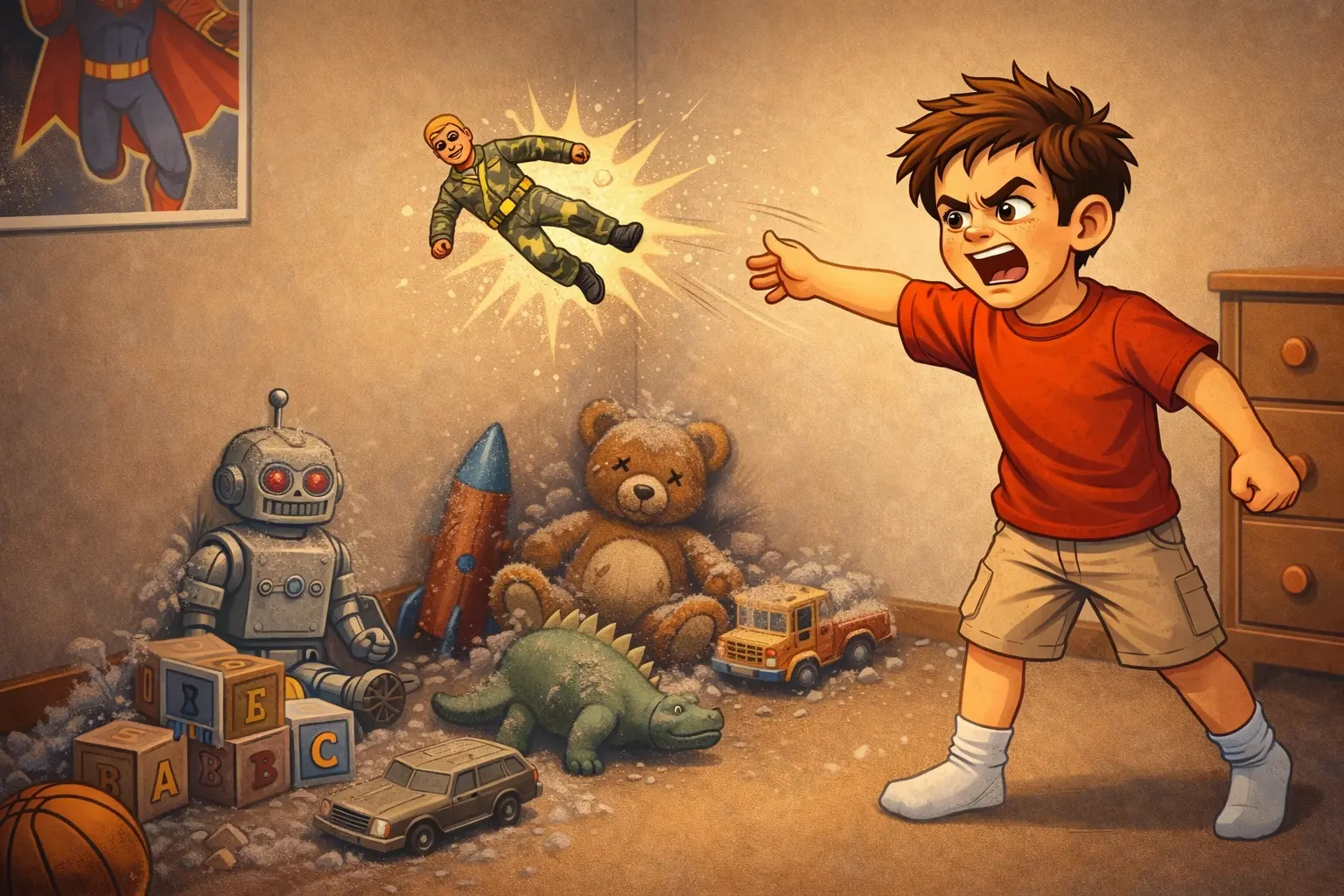
And… Action Man crashed harder than a budget airline in a snowstorm.
Two days later, Action Man was grounded for life in the corner of my room. I had to find a new toy to make me happy again.
How I Kept Falling For It
Here’s the thing about being a kid in the ’90s and ‘00s: you were constantly swimming in marketing without even realizing it. TV commercials between Saturday morning cartoons and magazine ads that made every toy look revolutionary. Each one promised something better, more exciting, more essential than the last.
And like all of my classmates at primary school, I fell for it. A lot. Looking back now, all the must-haves of my childhood essentially followed the same pattern: intense begging, brief excitement, quick disappointment, permanent dust collection.
Because Action Man wasn’t alone. There were Lego sets with missing bricks, Pokémon cards that tanked in value the second a new expansion dropped (probably made a mistake on that one), and Beyblades that spun for thirty seconds of glory before becoming desk clutter. Every single one followed the same cycle: a short high, then silence.
And unlike Woody in Toy Story, none of my toys seemed particularly bothered about being replaced by the next shiny thing. They just quietly accepted their fate in the corner while my parents, who’ve always been frugal, probably sat there wondering how their kids kept falling for marketing campaigns that basically sold overpriced plastic disappointments.
The Only Toy That Lasted
One toy never lost its magic, though: a football. The round kind, not the American one.
Not because it was indestructible or expensive. The opposite, actually. It was cheap, simple, and eventually wore out like everything else.
But what it created? That lasted. Pickup games with neighbors until dark, hours in the park with my brother, the occasional smashed window that had us sprinting away from angry neighbors. The ball itself wasn’t valuable, but the time we spent together because of it was.
And maybe that’s when the pattern started revealing itself. The things that broke or bored me weren’t valuable. The moments with my family and friends were.
When We Stopped Asking for Stuff
So as birthdays passed, my brother and I stopped asking less for toys. We already had heaps of them lying around and became increasingly less interested in the next thing that would disappoint us in a week. Instead, we asked for money we could save until something we actually wanted came along and, even more important, a family dinner out with our grandparents.
A simple dinner? Absolutely. And looking back now, those dinners have become worth more than all the toys I ever owned.
There was this Dutch pancake restaurant we’d go to regularly. The pancakes were great, but that wasn’t really the best part. It was having all of us together at one table.
My mom’s parents were extraverted, present, and entertaining. Loud in the best way, impossible to ignore. The kind you do weird dances with on inappropriate songs around a campfire in the backyard. My dad’s parents were the complete opposite: composed, somewhat introverted, serious but very sweet. Measured in everything they said and did.
Put them at the same table with my parents, brother and me, and chaos followed. The extraverts would dominate the conversation. The introverts would try to get a word in. Someone would make a joke. Someone else would take it seriously, or make a sharp comeback. My brother and I would just sit there laughing at the whole dynamic.
Two of my grandparents are gone now, and the others unfortunately aren’t getting any younger. I’d pay anything (and I mean anything) without blinking twice for just one more of those dinners.
The toys are long gone, too. But I don’t miss a single one of them.
How This Shaped What I Spend Money On Today
That pattern from childhood gradually followed me into adulthood. Material possessions still disappoint me more often than not. The excitement fades, the thing breaks or gets replaced, or it just sits there taking up space.
So today, I deliberately spend more on experiences than things: A good dinner with friends, a day trip somewhere new, a weekend abroad. Yes, it costs money, but every single time I walk away richer. Not in cash, but in stories.
Stories like the time in Aruba when I decided to order a tequila shot with a scorpion in it. At breakfast and in front of my parents, for no other reason than the option simply presenting itself. Or the moment in Oman when we almost drove off a cliff because the narrow mountain road suddenly ended, and we had to reverse the entire way back before dark, hearts pounding the whole time.
The stories from those experiences appreciate every time someone brings them up, every time we laugh about what happened. Meanwhile, no one’s ever gathered years later to say: “Remember that time you bought that slightly faster iPhone?”
When I do buy material possessions today, I ask myself first if they serve a clear function and will last long enough that I can forget about them. My laptop works and does what I need, my jacket keeps me warm and will last years. I’m perfectly fine spending more when it means higher durability. And if you’ve ever read the Boots Theory, you know it might actually even be cheaper in the long run.
The Trade-Off Nobody Talks About
Of course, saying yes to experiences also means saying no in other areas. For me, one of the clearest examples is my car.
I drive a 15-year-old Toyota hybrid with over 250,000 kilometers on the clock, and hopefully many more to go. When I bought it secondhand, it ticked every box: cheap, safe, reliable, fuel-efficient. Basically the Labrador of cars: loyal, low-maintenance, perfectly boring.
I’ve sat in Porsches before and loved every second of it. But would owning one make me happier than a couple of weeks abroad with my friends? Not even close. Buying a car like that might make total sense compared to other cars in its price range, but not compared to the exorbitant amount of dinners, travel and other activities that could be done with the same money.
That’s the opportunity cost people rarely think about when buying things. Every euro spent impressing others or chasing status is a euro that can’t create a memory with the people who matter. So my money went to a cheap, reliable car with maintenance costs so low it’s almost laughable. It gets me everywhere I need to be and allows the rest of my money to stay invested or go to flights, dinners, and adventures instead.
Irreplaceable Memories
Look, I know you can’t pay rent with memories. You’ll always need material things: a place to sleep, tools that work, clothes that make you presentable. But I try to buy those for durability and purpose, not for signal. And what’s left after covering those needs? I save it for what actually makes life rich: dinners with the people I love, trips to places I’ve never been, conversations that turn into stories, laughter that echoes long after the moment ends.
Most stuff gives you a quick dopamine hit, then it breaks, fades, or gets replaced. Experiences give you stories, memories, and bonds that appreciate in value every time you retell them. Action Man never flew, but in a way he taught me how to invest. Not in plastic that disappoints, but in stories that last.
The toys are gone. The grandparents who made those dinners special are partially gone too. But the memories from those restaurant chaos sessions? Those are still here, still valuable, still irreplaceable.
That’s why I choose memories over things. Because real wealth isn’t parked in your driveway or gathering dust in a corner. It lives in the stories you share, the people you love, and the moments that last long after the receipt is gone.
About The Fillennial
The Fillennial is a Dutch blogger on a mission to inspire better and healthier money conversations, by bringing back the true ‘personal’ in personal finance. On his blog he openly shares the core memories that have shaped his relationship with money, and the unexpected lessons that emerged from them.
And if you read carefully, there might be more hiding in his stories than you’d expect…
Learn more →