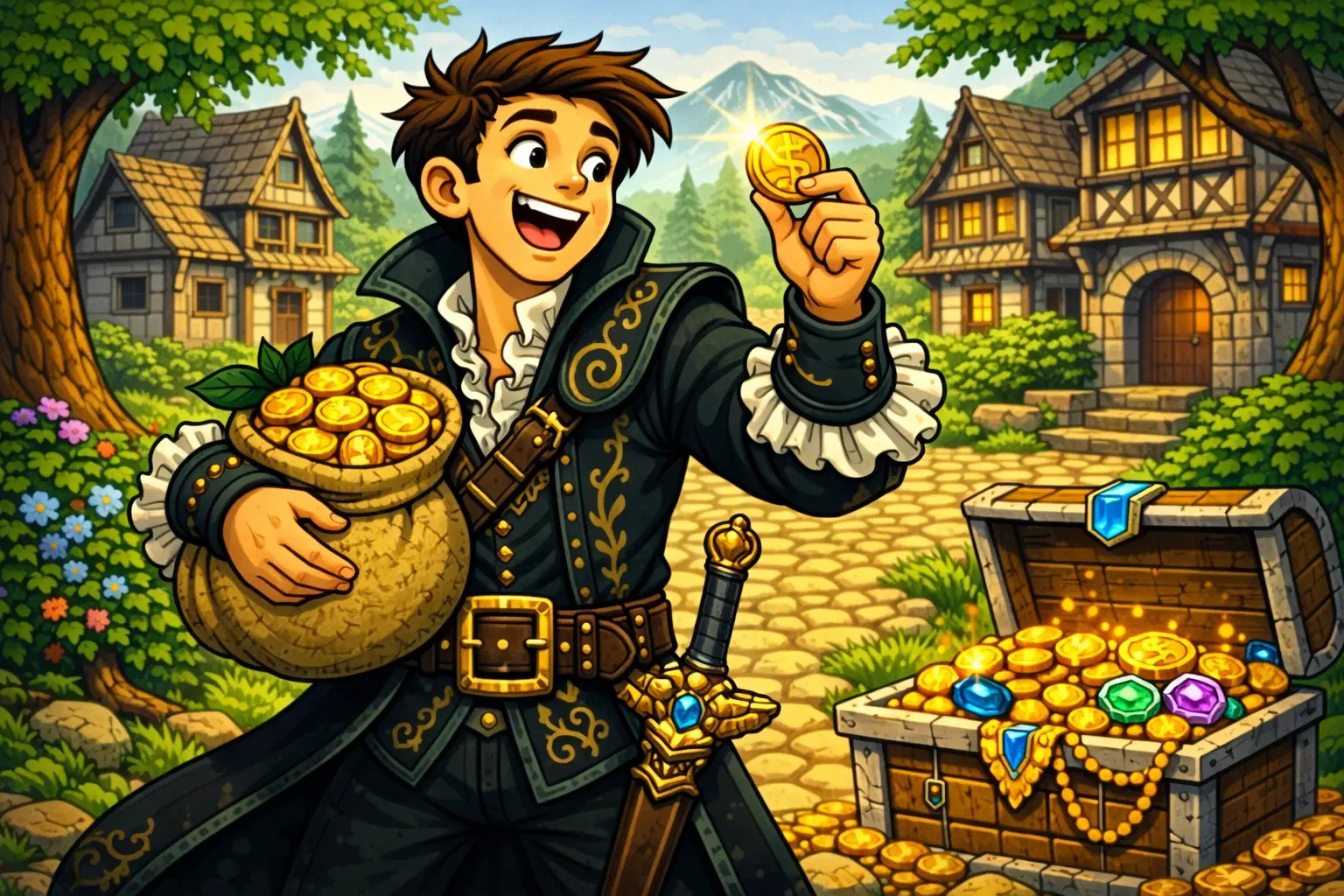
Fable II taught me investing lessons long before real life did: buy assets, let money work for you, and build the freedom to play on your own terms.
When I started my investing journey, the numbers were small at first. But after years of consistent investing I watched the growth gradually starting to accelerate, and something about that felt weirdly familiar. I couldn’t quite place it at first, and that feeling of familiarity kept nagging at me.
Maybe you’ve experienced something similar as well. That weird recognition when something you learned as a kid suddenly starts making sense in your adult life. Like muscle memory, but for concepts instead of movements.
It took me a few weeks before it clicked: I’d experienced this exact investing thing before, years ago, in a video game where I spent as much time kicking chickens and flirting with villagers as actually saving the world.
That game was Fable II, and I still love it today. Not because it tried to teach me anything about money, but because it gave me a gaming experience that I’ve never been able to get anywhere else.
It also let me unconsciously experience how investing works and feels, long before I ever opened my first investment account. Not through lectures or tutorials, but by letting me become a landlord in a medieval fairytale world drenched with British humor and sarcasm.
Why a Game From 2008 Still Feels Like Home
Fable II is a fantasy RPG set in the fictional world of Albion, and was released in 2008. It is absurd, charming, and still one of my favorite games of all time, which is why I replay it virtually every year. Not because the graphics hold up or the combat is revolutionary, but because there’s something genuinely cozy about it.
If you’ve never played it: imagine Monty Python meeting The Sims, and every NPC having a strong British accent that makes even insults sound charming. If you did play it, you already know exactly what I’m talking about, and you’re probably remembering your own ridiculous adventures in the game.
Most RPGs make you the Chosen One from the start, but Fable II does something entirely different. Sure, you’ll save the world at some point, but first you need to eat, pay rent, and prove yourself. And maybe marry that sexy shopkeeper you’ve been flirting with, even though you already have a spouse in another village.
It’s that mix of epic quests, mundane choices and absurd twists that makes the world feel lived-in. You’re not just watching Albion’s economy, you’re actively participating in it. Combine that with golden-hour lighting and a world you can fully explore in 40 hours, and you’ll get something rare: a game that feels like a warm hug, even when you’re fighting trolls.
Working Or Sleeping For Your Money
The game doesn’t hand you a lot of money when starting your journey. You’re a hero, sure, but you’re also broke. You need gold to survive.
The obvious route? Side hustles like blacksmithing, woodcutting or bartending, where your earnings depend on your skill at mashing buttons. Then there’s the hustler approach: buy items at one shop, and then sell them at another for profit. Or you can gamble if you’re desperate, though just like in real life there’s a big chance you’ll end up with empty pockets — the house always wins in the end.
All of these activities can make you money, but they also require you to actively grind for hours on end.
As for spending? You can buy better weapons and clothing, gamble it away, or buy properties. And that’s where investing suddenly comes into play.
During my first playthrough, relatively early in the game, I noticed some buildings had “For Sale” signs. The cheapest options were market stalls, and I had just enough gold for the vegetable stall on the town square. I bought it mostly out of curiosity and then went off to fight bandits, misbehave in a pub with my partner by doing weird dances and flipping people off, and kick some more chickens along the way.
When I checked my gold balance later, it had grown. The stall had been collecting rent every five minutes of active playtime. Not much, but it was accumulating without me doing anything.
Wait. Earning money while not actively working? That caught my attention.
If you’ve ever played a game with any kind of economy system, you probably know this feeling. That moment when you realize you’ve stumbled onto something that breaks the game’s intended progression. It feels like cheating, except it’s completely allowed.
From Broke Blacksmith to Medieval Mogul
So I bought another property, and then another. The rent from my first properties helped me afford bigger ones, each purchase making the next one easier. I wasn’t just collecting rent anymore, I was actually watching my money compound in real-time. Every gold coin went straight back into buying more properties, and property five came faster than property two, while property ten came faster than property five.
Before long, I owned dozens of properties across Albion: market stalls, houses, shops, taverns. And eventually, the largest property in the game: a castle worth one million gold. That number felt impossible when initially blacksmithing for 50 gold at a time, but here it was. Not because I was the strongest fighter, though I became that too once I could afford all the strength boosting potions, but because I’d figured out that passive income beats active grinding.
Properties generated rent whether I played or not, and they also went up in value as the town economy improved. The implicit lesson was clear: buy productive assets, dump the profits back in, and let time do its magic.
Eventually, gold wasn’t a constraint anymore and I could retire myself from actively working for it. The result? Doing quests because the stories were interesting, not because I needed the reward. Exploring because I actually wanted to get to know the world better, not because I was hunting treasure.
This financial freedom and “early retirement” didn’t come from buying the newest shiny sword, it came from owning the blacksmith that sold it to every other wannabe hero. And that feeling, even in-game, was surprisingly real. Not because pixels mattered, but because the progression felt earned and I could watch the growth happen.
And here’s the coolest part: even when my mum angrily barged into my room and unplugged the Xbox after I’d been playing for hours, my character kept earning gold. When I finally returned the next day, after dutifully receiving my lecture about screen time, I’d still made more of it.
When My Video Game Strategy Became My Investment Strategy
Fast forward a decade. I’m in my mid-twenties, opening my first investment account and buying ETFs for the first time.
If the companies in those ETFs paid dividends, they got automatically reinvested. That was exactly like reinvesting my first market stall rent in a new property. I watched my portfolio slowly grow through the ups and downs of the market, each gain making future gains larger. Earlier investments had more time to grow, just like earlier property purchases in Fable.
The mechanics were identical. One used digital gold coins and the other used actual euros, but the pattern was the same.
The feelings matched as well. Watching my actual portfolio grow felt like watching my property empire expand, with at some point that same “holy shit, this is actually working” feeling. Hitting €10,000 invested felt like buying my first major property, while hitting €100,000 felt like owning the castle. Different stakes, but a similar sensation about having built something that compounded while simultaneously seeing financial constraints loosening.
Playing Fable helped my investing journey because I’d already experienced compound growth there. “Own productive assets”, “reinvest for acceleration”, and “time amplifies everything” weren’t abstract concepts anymore. They were patterns I’d already watched play out with pretend money, but now they were happening in real life.
My brokerage app doesn’t have chickens to kick, though, which honestly is a serious loss.
The Best Lessons Often Sneak Up On You
I still replay Fable II almost every year, and I always start the same way: earn enough gold as fast as possible, buy that first property immediately, and start the compound growth cycle from day one.
It’s become a ritual, but it’s also a reminder.
Sometimes the most practical education comes from the least likely places. Sometimes it comes from a medieval fantasy world where you can kick chickens, seduce villagers, own taverns, and accidentally learn that cash flow beats combat skills.
Fable II gave me something most investing books don’t: a reference point that made investing make sense and feel familiar when I finally started for real. I didn’t just learn that compound growth works, I’d seen it happen before. I didn’t just understand passive income conceptually, I experienced what it feels like when money comes in while you’re doing something else.
My guess is that you probably also have your own version of this. Might’ve been a different game, a book, a summer job, or simply watching your parents teach you something that only made sense later. The source matters way less than realizing that a random experience suddenly becomes useful.
So next time someone says video games are a waste of time, tell them yours taught you about compound growth and passive income. Not because it sounds impressive, but because it might actually be true.
And if they don’t believe you? Tell them to buy a vegetable stall in Albion and report back in a year.
If this story gave you something, feel free to pass it on!
Leave a Reply